
For years, Shimla has been the default mountain escape in North India. It is accessible. Recognisable. Familiar.
But as Himalayan tourism evolves — and as more travelers begin valuing experience over convenience — a quieter question has started emerging:
Is there something beyond Shimla?
That’s where Narkanda enters the scene.
Located in the Shimla district of Himachal Pradesh, approximately 40 km from Shimla, Narkanda sits higher in altitude, lower in noise, and far removed from the commercial pace that now defines many popular hill stations.
Having spent years running a property in Manali — and now building a premium all-inclusive wellness retreat near Narkanda — I’ve observed this shift firsthand. The choice between Shimla and Narkanda is not about which destination is better.
It’s about what kind of mountain experience you’re seeking.
Let’s explore that honestly.
Shimla vs Narkanda: Movement vs Stillness
Shimla thrives on movement.
Mall Road cafés, colonial facades, shopping streets, evening strolls — the city has rhythm. It works beautifully for families, first-time visitors, and those who enjoy social energy in the mountains. But rhythm can sometimes become noise.
Traffic congestion during peak season, hotel density, and seasonal tourism surges have changed Shimla’s character over time. It remains charming — but it is no longer quiet.
Narkanda, in contrast, feels deliberately slower.
There is no commercial promenade. No crowded café strip. No evening rush.
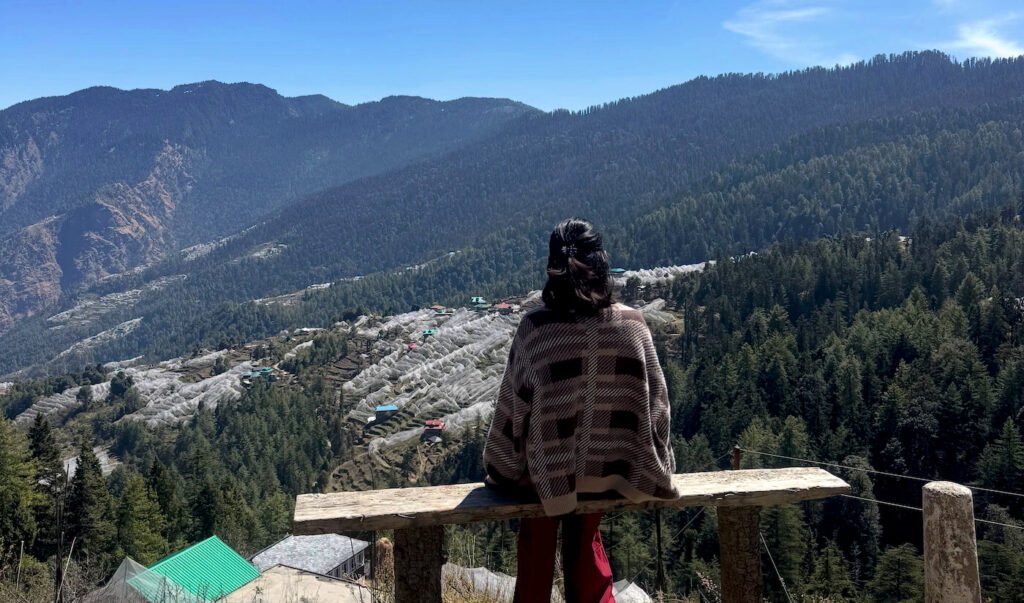
Instead, mornings begin with forest light filtering through cedar trees. Evenings close quietly behind apple orchards stretching across Matiana and Theog. The mountains feel less observed — and more lived in.
If Shimla offers stimulation, Narkanda offers restoration.
Shimla vs Narkanda: Accessibility vs Intention
Shimla is extremely convenient.
Well connected by road and rail, it allows travelers to step into the mountains without much effort. This ease is its strength.
But that same convenience makes it a high-volume destination.
Narkanda requires intention.
After reaching Shimla, you drive approximately 1.5 hours further along NH-5. The journey is scenic — winding roads, orchard belts, higher elevation — but it filters out impulse tourism.
What remains are travelers who have chosen the destination consciously.
In my experience, that shift in effort changes the psychology of the trip. You arrive differently. Slower. More prepared to disconnect.
For those considering a luxury nature stay near Narkanda or a curated wellness retreat in Himachal Pradesh, that intentional arrival is part of the experience.
Snowfall: Spectacle vs Immersion
Both Shimla and Narkanda receive snowfall.
However, due to its higher altitude (around 2,700 meters), Narkanda often receives heavier and more consistent snow than Shimla.
In Shimla, snowfall becomes an event — celebrated, photographed, crowded.
In Narkanda, snowfall becomes a landscape.
The difference is subtle but powerful. Instead of gathering around spectacle, you move through silence.
Snow-covered cedar forests, quiet orchard slopes, uninterrupted white ridgelines — winter feels immersive rather than performative.
For travelers seeking a premium all-inclusive mountain retreat in India during winter, this distinction matters. It shifts the focus from entertainment to experience.
Accommodation In Shimla vs Accommodation in Narkanda: Commercial Hospitality vs Curated Retreats
Shimla’s hospitality ecosystem is diverse. You’ll find heritage hotels, large properties, boutique stays, and homestays across price ranges.
Narkanda’s accommodation landscape is smaller and more intimate.
But more importantly, the philosophy differs.
Shimla largely operates on traditional hospitality models: rooms, restaurants, sightseeing convenience.
Narkanda is increasingly aligned with experiential travel — luxury glamping, wellness retreats, nature immersion, and farm-to-table living.
This shift is not accidental.
After running a property in Manali for several years, I saw firsthand how mountain destinations expand rapidly. Volume increases. Infrastructure grows. Character shifts.
When I decided to build again — this time near the quiet stretch between Theog and Narkanda in Shimla district — I was not looking for scale. I was looking for sustainability.
The model we are building here is simple but intentional:
- Luxury glamping tents instead of concrete blocks
- Daily yoga sessions instead of itinerary overload
- Guided hikes instead of vehicle sightseeing
- Farm-to-table Himalayan cuisine instead of buffet excess
Because the future of mountain hospitality, in my view, lies in depth — not density.
Who Should Choose Shimla?
Shimla remains ideal for:
- First-time mountain travelers
- Families wanting easy mobility
- Travelers prioritising café culture and shopping
- Those with limited time
- Its energy is accessible and structured.
Who Should Choose Narkanda?
Narkanda naturally aligns with a different profile.
It suits travelers who value:
- Privacy over proximity
- Nature immersion over social activity
- Curated experiences over checklist tourism
- Silence as a luxury
If you are planning a yoga retreat in Himachal Pradesh, organising a corporate wellness offsite, or seeking an all-inclusive mountain retreat experience that prioritises mental reset, Narkanda offers a more focused environment.
It allows intention to breathe.
And as you know, there is a larger trend unfolding across the Himalayas.
Earlier, mountain travel was about:
- Sightseeing
- Quick weekend escapes
- Photographs
- Snowfall announcements
Today, many urban professionals and international slow travelers are seeking something else:
- Digital detox experiences
- Farm-to-table culinary immersion
- Luxury glamping in Himachal Pradesh
- Wellness retreats near Shimla district
Shimla continues to serve mass tourism efficiently.
Narkanda quietly supports this newer wave of mindful travel.
And that difference will only become more visible over time.
So, Which One Is Better? Shimla or Narkanda?
If your ideal mountain escape includes movement, energy, and accessibility — Shimla delivers.
If your ideal escape includes restoration, elevation, and intention — Narkanda may feel more aligned.
The two destinations are only 40 km apart geographically.
But experientially, they can feel worlds away.
And perhaps that is why, when I chose to build my next chapter in the mountains, I did not choose the obvious answer.
I chose the quieter one.
Because sometimes, the best mountain experiences are not the ones everyone is talking about.
They are the ones that give you space to hear yourself again.
FAQs
Is Narkanda better than Shimla?
Narkanda is quieter, higher in altitude, and more nature-focused than Shimla. It is ideal for wellness retreats, luxury glamping, and slow mountain escapes, while Shimla offers more commercial energy and accessibility.
How far is Narkanda from Shimla?
Narkanda is approximately 40 km from Shimla and takes around 1.5 hours by road.
Which place receives more snowfall?
Narkanda generally receives heavier snowfall than Shimla due to its higher elevation.
Is Narkanda good for corporate or yoga retreats?
Yes. Its peaceful setting within Shimla district makes it ideal for curated corporate wellness retreats and yoga programs.